
Power Of An Arbitrator To Grant Interest And Scope Of Interference By The Courts

AUTHORED BY: GAURAV PURI (Founder & Principal Advocate, GLS LAW OFFICES) DHRUV SRIVASTAVA (LEGAL PROFESSIONAL) INTRODUCTION: The Arbitration Act, 1940 (The 1940 Act) [i] provided for no such prohibition for an arbitrator to award interest: pre-reference, pendente lite [ii] or post-award. The adoption of the Arbitration and Conciliation Act, 1996 (The Act) [iii] has drawn […]
The way forward of Arbitration in India during Coronavirus

AUTHORED BY: GAURAV PURI (Founder & Principal Advocate, GLS LAW OFFICES) Introduction India is now reaching the end of its lockdowns and gradually opening up the economy. But according to many experts, Coronavirus will not be leaving us any time soon which means the restrictions on travel and the rules of social distancing are here […]
Waiver Of Rights: The Indian Scenario

AUTHORED BY: GAURAV PURI (Founder & Principal Advocate, GLS LAW OFFICES) DHRUV SRIVASTAVA (LEGAL PROFESSIONAL) INTRODUCTION: The Arbitration and Conciliation act, 1996 (Arbitration Act) embodies the Doctrine of Waiver of right to object which corresponds with Article 4 of the UNCITRAL Model Law. The relevant provision is found in Section 4 of the Arbitration Act. The objective of […]
A Case For Shifting The Entries Related To Labour Law In The Union List

AUTHORED BY: GAURAV PURI (Founder & Principal Advocate, GLS LAW OFFICES) Introduction In wake of the global pandemic and the economic distress that set in thereinafter at least three states being Uttar Pradesh, Gujarat and Madhya Pradesh have recently promulgated ordinances with the effect of suspending almost all labour law protections in their states including social […]
The COVID-19 lockdown and employees’ due

AUTHORED BY: GAURAV PURI (Founder & Principal Advocate, GLS LAW OFFICES) Ameya Pratap Singh (DPhil (PhD) in Area Studies at the University of Oxford. He previously read for an MPhil in South Asian Studies at the University of Cambridge, and a Masters in International Relations at the London School of Economics.) (Director at Yogayatan Group and […]
The Prohibition Of Employment As Manual Scavengers And Their Rehabilitation Act, 2013: Analysis

AUTHORED BY: GAURAV PURI (Founder & Principal Advocate, GLS LAW OFFICES) RAINA MAHAPATRA (TRAINEE SOLICITOR (CDR), EVERSHEDS SUTHERLAND INTERNATIONAL LLP) ABSTRACT Manual Scavenging is an age old archaic practice in India. It originates from the times of Ancient India and had been imbedded as a part of our culture. Even though, the Indian Constitution imbedded […]
Safai Karamchari Andolan V. Union Of IndiaEquivalent Citation: (2014) 11 SCC 224

AUTHORED BY: GAURAV PURI (Founder & Principal Advocate, GLS LAW OFFICES) Introduction India, even after 7 decades of independence, is in a constant struggle to end the most ‘inhuman’ and ‘undignified’ practice of manual scavenging.[1] The Ministry of Social Justice and Empowerment has recorded the following statistics vis-à-vis Manual Scavengers and Dry Latrines. The survey […]
THE INDIAN QUASI-FEDERAL STRUCTURE AND ARTICLE 370: A CONUNDRUM.
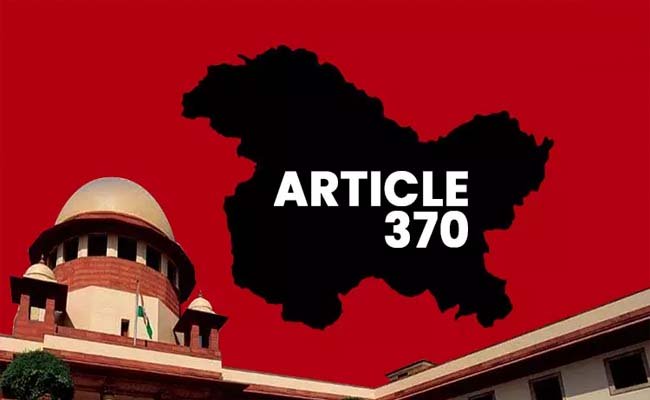
AUTHORED BY: GAURAV PURI (Founder & Principal Advocate, GLS LAW OFFICES) ABSTRACT:The nature of the Indian federal structure is a multi-faceted one, involving dynamism when it comes to each state. India is considered as one of the prime examples of a functional asymmetric federal structure, and one with centralizing tendencies. Therefore, it has been widely referred […]
The Muslim Women (Protection of Rights on Marriage) Act, 2019: An Evaluation through Article 14

AUTHORED BY: GAURAV PURI (Founder & Principal Advocate, GLS LAW OFFICES) INTRODUCTION The social movement to abolish talaq-e-biddat i.e. triple talaq has been a long-standing movement in the judicial history of India. The Supreme Court, in the case of Shayara Bano v. Union of India and Anr had finally put an end to the practice declaring it to […]
S.5(21) of the Insolvency and Bankruptcy Code: Does Refundable Advance Constitute Operational Debt?

AUTHORED BY: GAURAV PURI (Founder & Principal Advocate, GLS LAW OFFICES) Introduction Since the inception of the Insolvency and bankruptcy Code (hereinafter ‘Code’), the legislation has been shrouded in conjecture and uncertainty leading to very frequent release of clarifications, amendments and a dire need for judicial precedents. In Swiss Ribbons, the two types of debt […]