
AUTHORED BY: GAURAV PURI (MANAGING PARTNER, GLS LAW OFFICES)
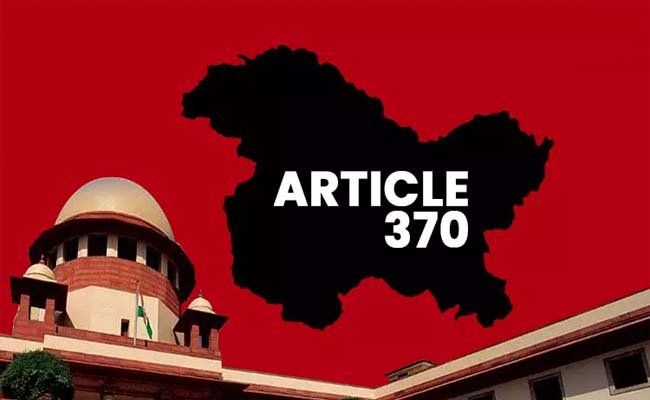
ABSTRACT:The nature of the Indian federal structure is a multi-faceted one, involving dynamism when it comes to each state. India is considered as one of the prime examples of a functional asymmetric federal structure, and one with centralizing tendencies. Therefore, it has been widely referred to as a ‘quasi-federal’ structure, a fact reiterated in the Basic Structure doctrine. With the abrogation of Article 370 of the Indian Constitution, questions with regard to the relation of Union of India vis-à-vis Jammu and Kashmir have come to the forefront.
In this paper, the author aims at ascertaining the relation of the Union of India with its federal units, with special emphasis on Jammu and Kashmir, and analyse the larger implications of the abrogation of Article 370 on the federal structure of India.
The paper seeks to achieve the afore-mentioned objectives through thorough study of the Constitutional provisions, historical context, judicial precedents and the existing socio-political scenario. Further, the provisions of the Constitution have been analysed to ascertain the procedural requirements of abrogating Article 370 and to test the constitutionality and legality of the Government’s actions. Lastly, the paper seeks to evaluate the ‘Jammu and Kashmir Reorganisation Act, 2019’ and its implications on the Indian federal structure.
Keywords: Abrogation, Jammu and Kashmir, Article 370, Federalism, Asymmetric
Published in: Genesis to Terminus of Article 370: Socio-Legal Perspectives” published by Thakkar Law Publishers (ISBN 978-81-944812-1-8 ) · Jan 20, 2020
PDF LINK: https://www.glslawoffices.com/wp-content/uploads/2025/03/Final-Paper-Art.-370.pdf